

Publications
Here you will find research papers from our customers and our R&D team that use Fluxim’s R&D tools.
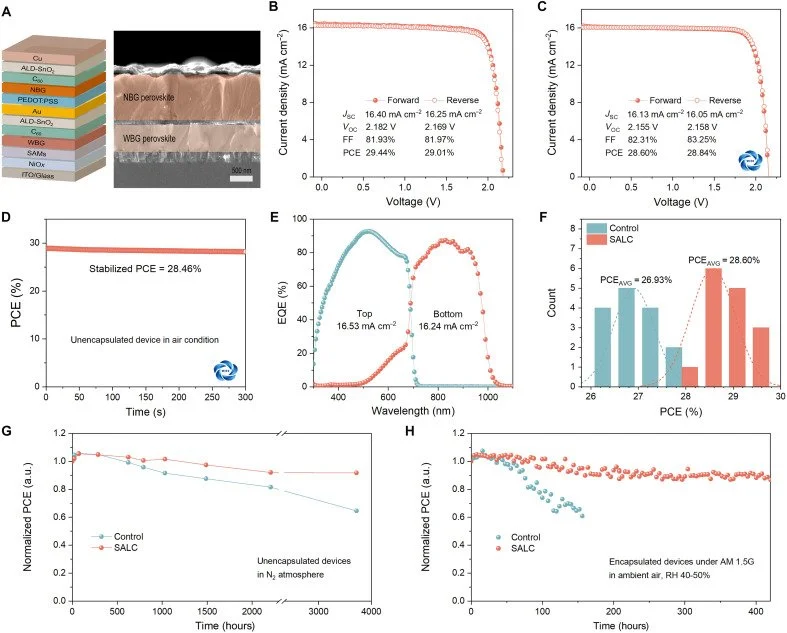
Research Paper — Thioether Coordination Improves Tin-Lead Perovskites for All-Perovskite Tandems
He, L., Wang, H., Wang, Z., Yan, Z., Huang, A., Zhang, J., Yang, X., Zeng, M., Wang, Z., Yang, G., Shi, Z., Zhang, W., Shen, L., Bai, Y., & Cheng, H. M. (2026). Enhancing Sn-Pb perovskite homogeneity via thioether coordination for efficient and stable all-perovskite tandem solar cells. Science Advances, 12(28), eaeb8790. https://doi.org/10.1126/sciadv.aeb8790
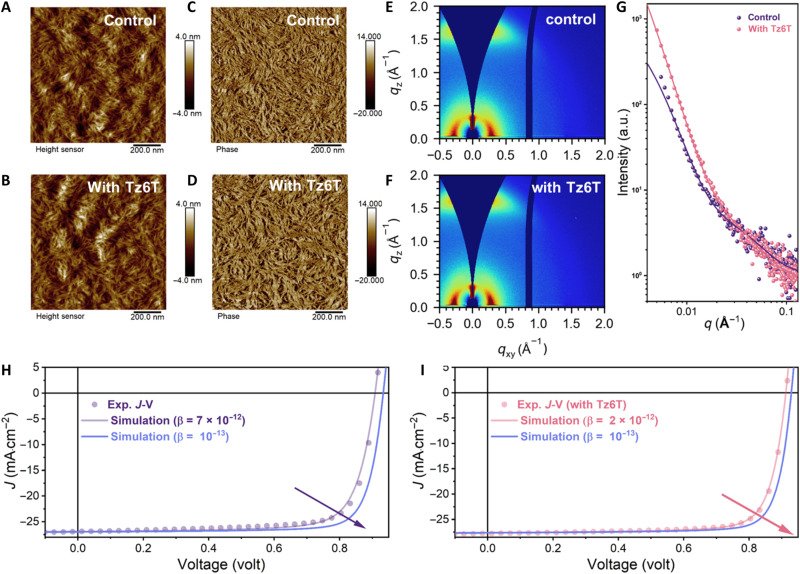
Research Paper — Setfos Supports Scalable and Automated Organic Solar Cell Fabrication
Tang, H., Hu, D., Wang, R., Li, Y., Huang, P., Lv, J., Zhang, Z., He, Y., Osterrieder, T., Marengo, M., Li, H., Liu, H., Zhao, L., Chen, Q., Huang, J., Lu, X., Yang, Y. M., De Wolf, S., Lee, D. J., . . . Brabec, C. J. (2026). Ink-state preaggregation control enables scalable and automated fabrication of highly efficient and stable organic photovoltaics. Science Advances, 12(9), eaea6522. https://doi.org/10.1126/sciadv.aea6522
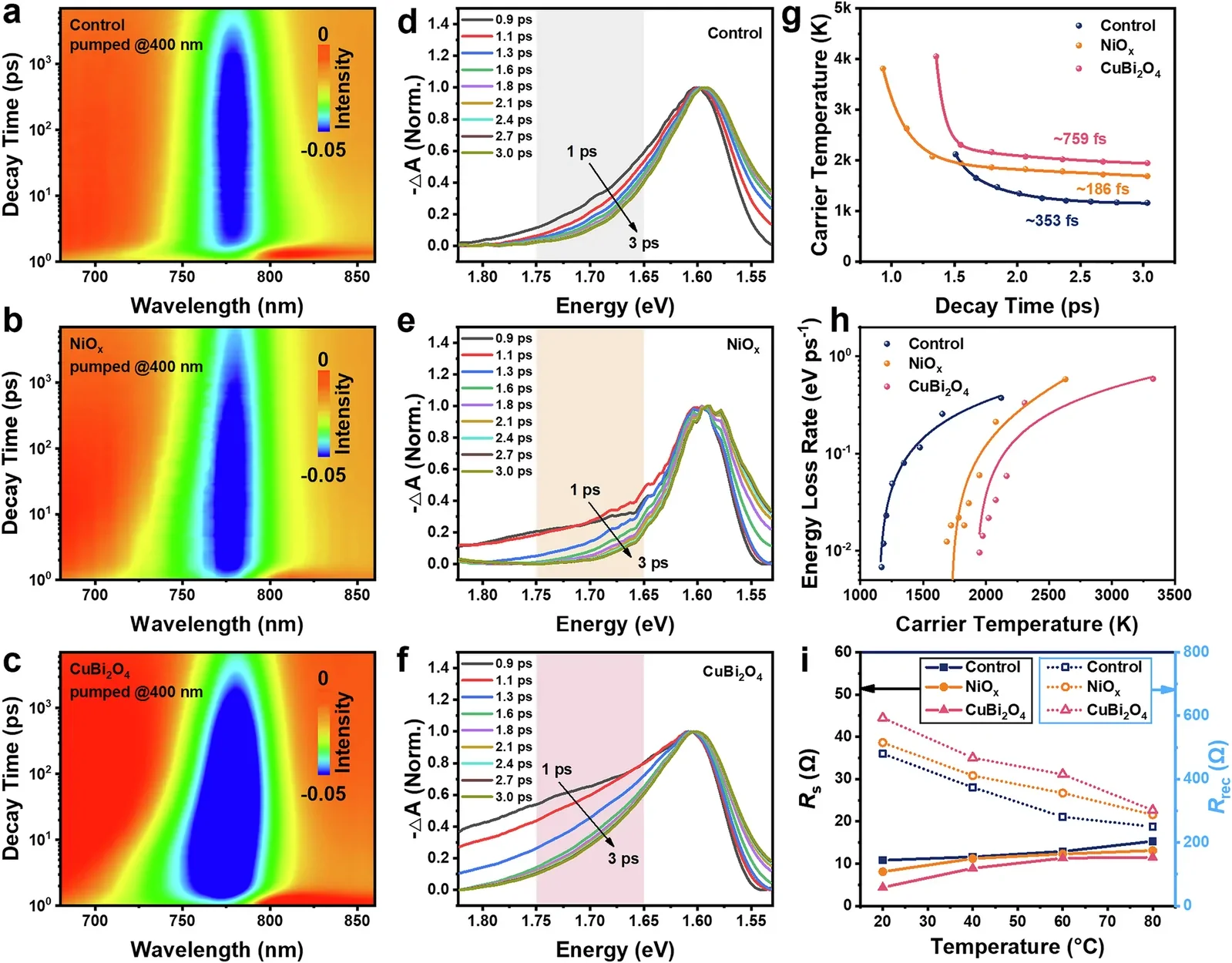
Research Paper — Phonon-Engineered Hole Transport Layer for Stable Perovskite Solar Cells
Wu, X., Chen, Y., Shen, Y., Du, E. W., Chen, H., Liu, S., Peng, Y., Zhou, J., Duan, Y., Chen, Y., Pu, S., Wu, Y., & Peng, Q. (2026). Enhancing Phonon Group Velocities and Interfacial Heat Conduction for Efficient and Stable Perovskite Solar Cells. Nature Communications, 17(1), 8874. https://doi.org/10.1038/s41467-026-75825-9
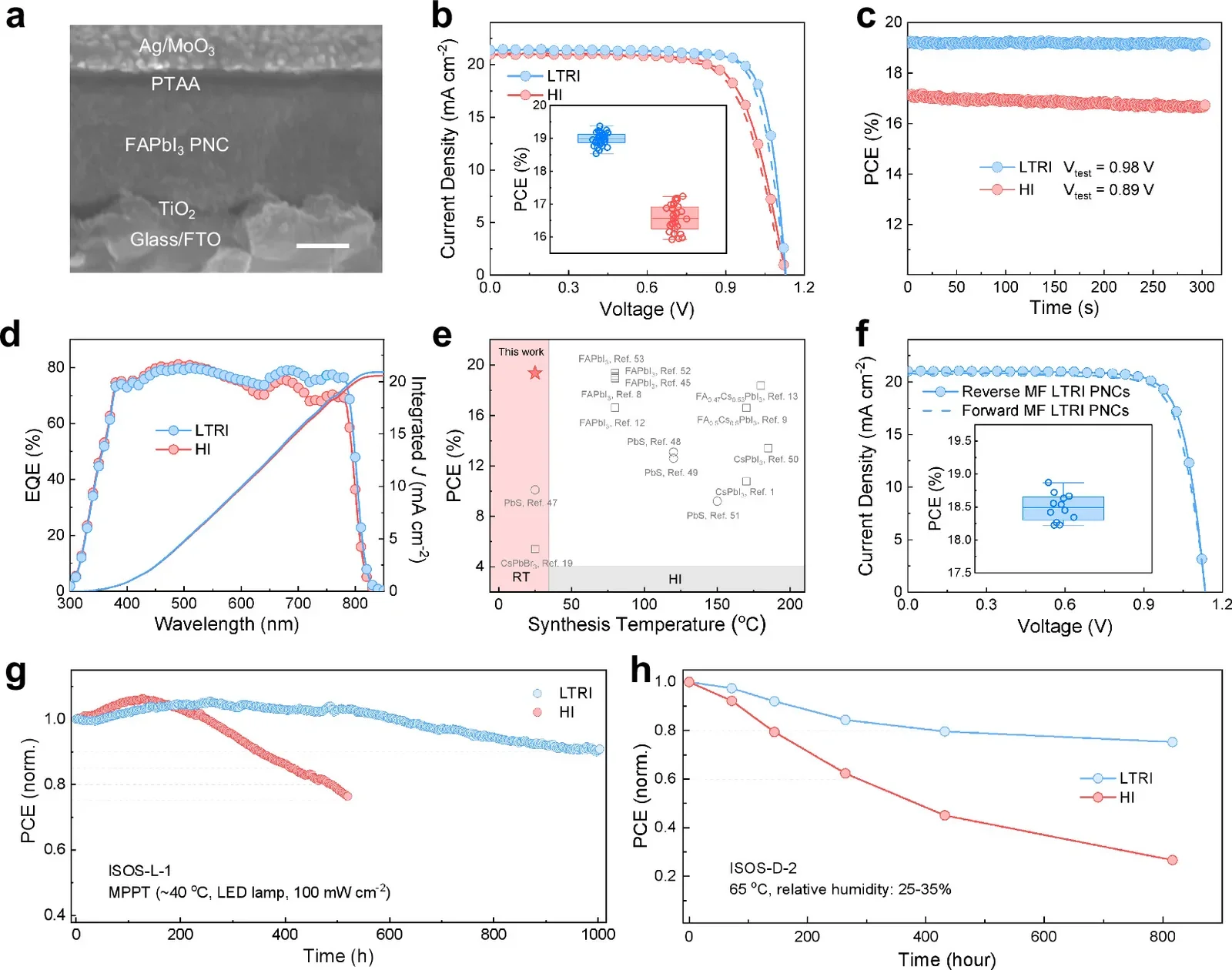
Research Paper — AI-Accelerated Synthesis of Perovskite Nanocrystals for Low-Cost Solar Cells
Zhao, X., Zhao, C., Jin, L., Zhang, X., Li, D., Zhu, W., Li, H., Li, Y., Wu, T., & Yuan, J. (2026). AI-accelerated scalable synthesis of nanocrystals for cost-effective photovoltaics. Nature Communications, 17(1), 11301. https://doi.org/10.1038/s41467-026-78268-4
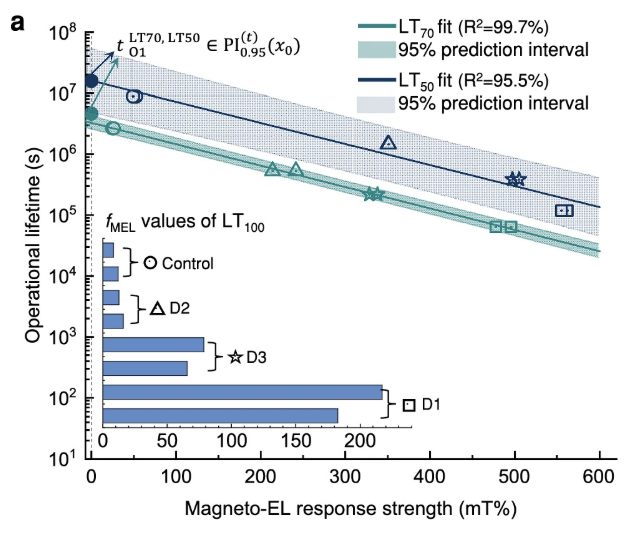
Research Paper — Predicting Blue OLED Lifetime with Magneto-Electroluminescence
Ji, J., Jung, Y. H., Jang, E.-J., Song, B., Oh, J., Lee, J.-H., Kwon, J. H., & Yoo, S. (2026). Magnetic electroluminescent response as a predictive indicator of operational lifetime in phosphorescent blue OLEDs. Nature Communications, 17, Article 10650.

Research Paper — Setfos Reveals Ion Migration in Self-Powered Perovskite X-ray Detectors
Alberti, A., Valastro, S., Calogero, G., Mannino, G., Smecca, E., Spampinato, C., Bongiorno, C., Naselli, E., Finocchiaro, G., Pidatella, A., Mascali, D., & La Magna, A. (2025). Low-cost self-powered mesoporous perovskite devices for stable high-dose-rate fast-response X-ray detection. ACS Applied Electronic Materials, 7, 6428–6439.

Research Paper — Quantum-dot interlayers reduce plasmon losses in phosphorescent OLEDs
Truong, T. T., Dang, H. T., S, N. V., Gather, M. C., & Kwon, J. H. (2026). Inverted phosphorescent OLEDs with plasmon coupling from quantum dot interlayers for enhanced efficiency. Nature Photonics.

Research Paper — Litos Lite and Vitios Support Flexible Perovskite Tandem Modules
Luo, J., Austin, J. S., Romio, A., Cabas Vidani, A., Lai, H., Bühler, C., Saroglia, S., Quintana Ceres, P. O., Dimitrievska, M., Glatzel, T., Shih, C.-J., & Fu, F. (2026). Scalable coating of spatially uniform WBG perovskites via inhibiting SAM aggregation for flexible all-perovskite tandem modules. Small Science, 6, e70379.

Research Paper — Setfos Guides BT.2020 Red OLED Cavity Design
Tirupati, M., S, N. V., Kumar, O. P., Rajput, A., Kim, H. U., Kim, J. Y., Muruganantham, S., & Kwon, J. H. (2026). Dibenzofuran-modulated narrowband red MR-TADF emitters for BT.2020 OLEDs with ultralow roll-off and long lifetime. Small, e74546.

Research Paper — Setfos Simulations Link Halide Segregation to Ionic Losses in Wide-Bandgap Perovskites
Kalasariya, N., Sowmeeh, P. F., Pena-Camargo, F., Vanin, F., Lukas, T., Dong, Y., Feng, Q., Liu, Z., Memon, W. A., Gao, D., Gong, J., Wu, X., Mendez, A. F. C., Hagenberg, J., Abadi, Z., Hultzsch, T., Zhao, X., Shah, S., Yu, H., ... Stolterfoht, M. (2026). How halide segregation governs the ion density evolution and ionic performance losses: From degradation to recovery. Advanced Energy Materials, 16(15), Article e03866.

Research Paper — Amorphous multilayers improve reverse-bias stability in perovskite solar cells
Huang, X., et al. (2026). Amorphous self-assembled multilayers for perovskite solar cells with improved reverse bias stability. Nature Energy.

Research Paper — Efficiency and stability trade-off in sky-blue OLEDs
Tankeleviciute, E., Jenatsch, S., Ruhstaller, B., Zysman-Colman, E., & Samuel, I. D. W. (2026). A trade-off between efficiency and stability in a class of sky-blue organic light-emitting diodes. FlexMat.

Research Paper — Effect of microlens arrays on light extraction efficiency in red and green quantum-dot light-emitting diodes
Suhyun Park, Soobin Sim, Hyeonjun Lee, Hak June Lee, Jeong Woo Park, Jin Su Park, Wan Ki Bae, Hyunkoo Lee,
Effect of microlens arrays on light extraction efficiency in red and green quantum-dot light-emitting diodes,
Micro and Nano Engineering, Volume 29, 2025, 100325, ISSN 2590-0072

Research Paper:Phenanthrenequinone, a Nonvolatile, Nonhalogenated Solid Additive for Enhancing Thermal Stability in Organic Solar Cells
Kim, S. Y.; N’goran, P. E.; Jin, A. L.; Asuo, I. M.; Doumon, N. Y. Phenanthrenequinone, a Nonvolatile, Nonhalogenated Solid Additive, for Enhancing Thermal Stability in Organic Solar Cells. ACS Materials Au 2025, DOI: 10.1021/acsmaterialsau.5c00144.

Research Paper: GaAsSb/GaAsN Superlattices for Thin High-Efficiency Solar Cells
Schwarz, M., Gallego Carro, A., Gonzalo, A., Braza, V., Gonzalez, D., Hierro, A., Aeberhard, U., & Ulloa, J. M. (2026). Simulation, optimization, and experimental validation of 1 eV GaAsSb/GaAsN superlattice solar cells. Solar Energy Materials and Solar Cells, 296, 114057.

Research Paper: Tilted-Oriented 2D Perovskites for High-Performance Solar Cells
Kim, C., Lee, D. G., Kim, Y., Park, J., Kim, K., Kim, J., Lee, J., Lee, H., Seo, J., Jeon, N., Jeong, H., Kang, S., Lee, B., & Min, J.* (2025). Tilted-Oriented 2D Perovskites for High-Performance Solar Cells. Advanced Energy Materials.

Research paper: Stabilizing Perovskite Solar Cells at 85 °C via Additive Engineering and MXene Interlayers
Baumann, F., Padilla-Pantoja, J., Caicedo-Roque, J. M., Karimipour, M., Vahedigharehchopogh, N., Santiso, J., Ballesteros, B., Miranda Gamboa, R. A., Tian, Z., Raga, S. R., & Lira-Cantú, M. (2025). Stabilizing perovskite solar cells at 85 °C via additive engineering and MXene interlayers. EES Solar. Royal Society of Chemistry.

Research Paper: Self-assembled hole-selective contact for efficient Sn-Pb perovskite solar cells and all-perovskite tandems
Jingwei Zhu, Xiaozhen Huang, Yi Luo, Wenbo Jiao, Yuliang Xu, Juncheng Wang, Zhiyu Gao, Kun Wei, Tianshu Ma, Jiayu You, Jialun Jin, Shenghan Wu, Zhihao Zhang, Wenqing Liang, Yang Wang, Shengqiang Ren, Changlei Wang, Cong Chen, Jinbao Zhang and Dewei Zhao (2024), Self-assembled hole-selective contact for efficient Sn-Pb perovskite solar cells and all-perovskite tandems. Nature Communications.

Research paper: Drift-diffusion modeling of blue OLED degradation
Pizano, A., Lampande, R., Cawthorn, R., & Giebink, N. C. (2025). Drift-diffusion modeling of blue OLED degradation. Synthetic Metals, 311, 117797.

Research Paper: Switching From Acceptor to FRET Donor: How the Organic Solar Cell Architecture Can Change the Role of a Chromophore
Jin, H., Mallo, N., Zhang, G., Lindsay, O., Chu, R., Gao, M., McAnally, S., Etchells, I.M., Burn, P.L., Gentle, I.R. and Shaw, P.E. (2025), Switching From Acceptor to FRET Donor: How the Organic Solar Cell Architecture Can Change the Role of a Chromophore. Adv. Funct. Mater.,