
Researchers at CNR-IMM and INFN developed low-cost, self-powered mesoporous perovskite X-ray detectors with fast response and high radiation tolerance. The MAPbI₃ detector demonstrated a 3 ms detection response and endured 18,643 Gy of cumulative X-ray exposure over 17 hours under nitrogen without significant degradation. Using Fluxim's Setfos simulation software, the researchers modeled transient charge transport, trapping and ion migration, explaining differences in the electrical response of MAPbI₃ and CsPbI₃ detectors.
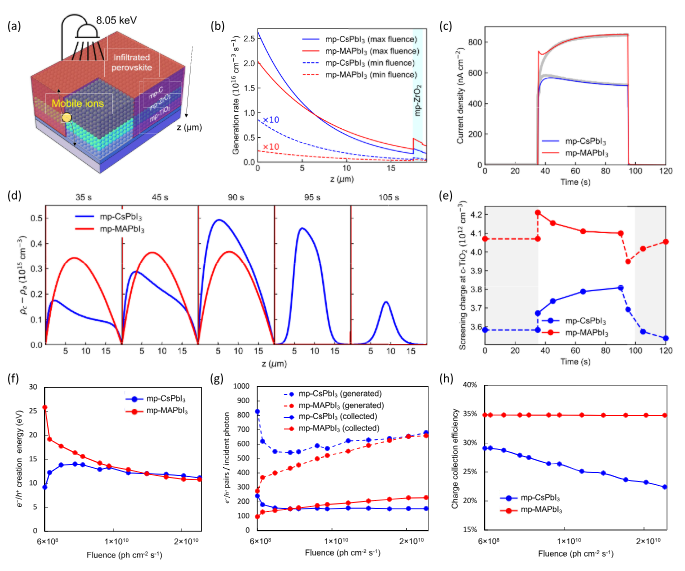
Figure 3, Alberti et al., ACS Applied Electronic Materials (2025), DOI 10.1021/acsaelm.5c00690. Licensed under CC BY 4.0.
Publication details
Authors: Alessandra Alberti, Salvatore Valastro, Gaetano Calogero, Giovanni Mannino, Emanuele Smecca, Carlo Spampinato, Corrado Bongiorno, Eugenia Naselli, Giorgio Finocchiaro, Angelo Pidatella, David Mascali and Antonino La Magna.
Journal: ACS Applied Electronic Materials, 7, 6428–6439
Year: 2025
DOI: https://doi.org/10.1021/acsaelm.5c00690
Open-access paper: https://doi.org/10.1021/acsaelm.5c00690
Fluxim tools used
Setfos — Transient drift-diffusion simulations incorporating charge generation, charge transport, trapping/detrapping and ion migration to reproduce detector currents and investigate the mechanisms governing X-ray response.
Why it matters
Fast, self-powered detection: Zero-bias operation with a demonstrated 3 ms MAPbI₃ detection response.
Radiation tolerance: 18,643 Gy accumulated over 17 hours under nitrogen with less than 5% current loss.
Understanding device physics: Setfos simulations connected mobile-ion redistribution with charge extraction and transient detector behavior.
FAQs
How was Setfos used in this research?
Setfos simulated transient charge transport, charge trapping and ionic migration using externally calculated X-ray generation profiles, helping explain the measured current response.
Why do MAPbI₃ and CsPbI₃ detectors respond differently?
The simulations indicated different ionic redistribution dynamics, including faster mobile-cation transport in MAPbI₃, which changes internal fields and charge collection.
Can these detectors operate without external bias?
Yes. Both mesoporous perovskite detector types demonstrated self-powered X-ray detection at zero applied voltage.