Litos
Stress-Test Platform for Degradation Analysis of OLEDs & Solar Cells

High-Precision Stability Testing for Degradation Insights
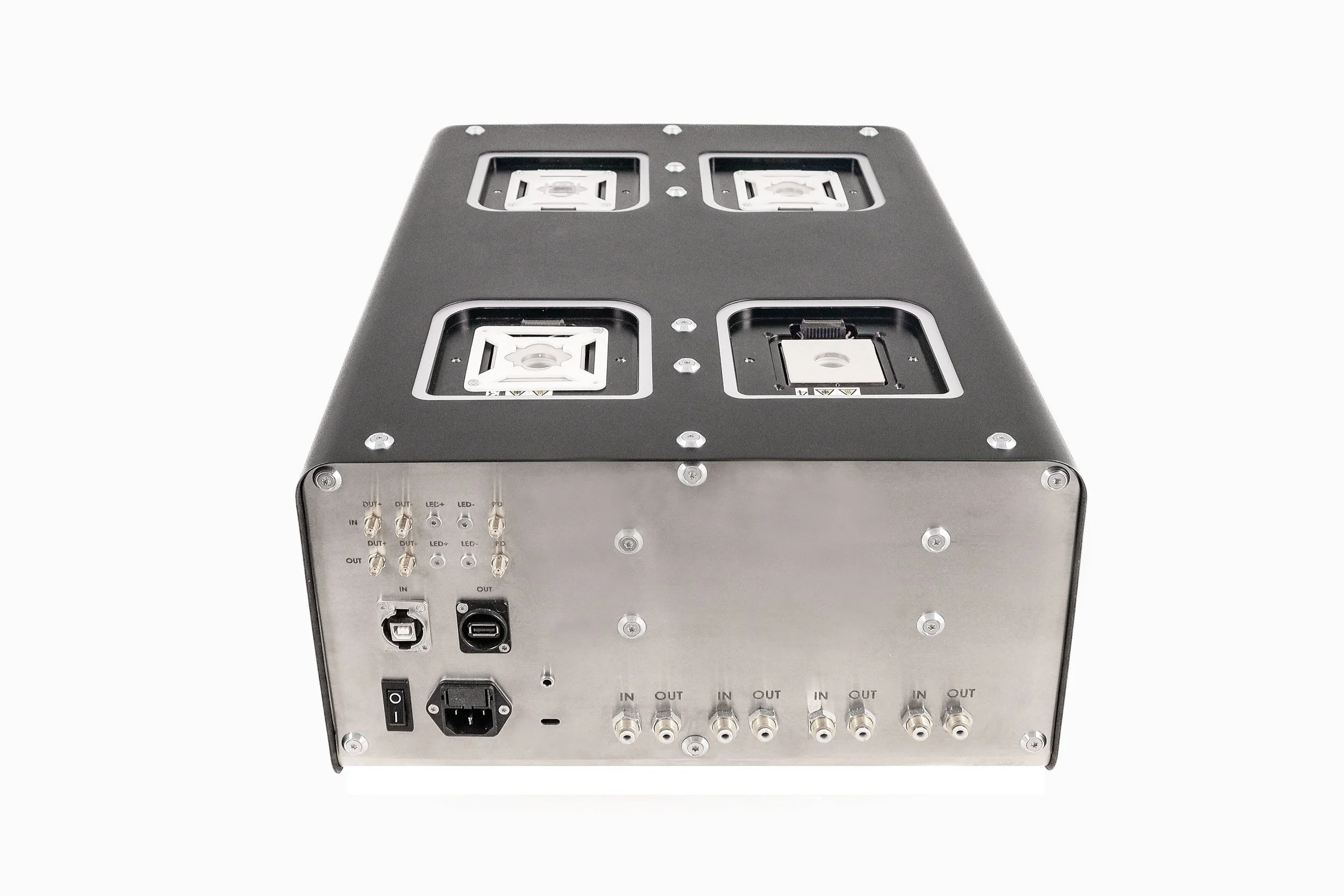
Litos is an advanced Solar Cell and LED stability lifetime measurement system, operated via Fluxim’s Characterization Suite (CS) software for complete control, data acquisition, and analysis. It comes with 16 or 32 parallel stressing channels distributed over 4 chambers, each with individual temperature and illumination control.
We offer a flexible design compatible with samples of different layouts. Both top- and bottom-emitting LEDs are compatible.
PV, LED and combined configurations are available.
The wide range of stress conditions inside a highly-controlled experimental environment, full automation and the possibility of interfacing Litos with Paios for in-depth degradation analysis, make it a primary choice for researchers that want to understand the degradation behavior of organic, perovskite and quantum-dots based LEDs and solar cells.
Litos for Solar Cells
Maximum power point (MPP) tracking, constant voltage/current
Independent white and UV LED illumination
1.5 suns-equivalent illumination for accelerated testing
In-situ UV-vis absorption possible for bleaching detection (extra spectrometer module)
In-situ PL and EL measurements possible (extra spectrometer module)
Designed to evaluate organic and perovskite solar cell lifetime
Litos for OLEDs
Constant current, constant voltage
Bottom emission and top emission compatible
Photodiode(s) to track emission in-situ
In-situ EL spectrum possible (extra spectrometer module)
Litos Advantages
Stress tests on perovksite solar cells and organic solar cells, according to ISOS protocols.
16, or 32 individual channels to address multiple Solar Cells or LEDs in parallel.
4 chambers with individual humidity sensors.
Design customized to the specific sample layout of the customer.
1 sun-equivalent LED illumination (white+UV)
Intermittent IV/IVL characterization
The Litos-Paios Integration provides a unique tool to study degradation mechanisms in Solar Cells and LEDs.
User-friendly software for automatic measurement control and parameter extraction.
Stressing at constant current, constant voltage, MPP-tracking
Compatible with Bottom and Top Emitting LEDs (chamber equipped with either BT/TP photodetectors)
Temperature control of the individual sample 0 – 85 °C.
Specifications
| Independent stressing and characterization of up to 32 pixels in 4 chambers | |
|---|---|
| Functionality | MPP, Voc, Jsc, JV(L), in-situ spectral measurements (PL and EL) |
| Operations | All channels are electrically independent. Temperature controller on stage. |
| Voltage Range | -9 V to 9 V |
| Maximum Current/Channel | 60 mA /channel |
| Current Resolution | Best/typical: 1 μA / 5 μA |
| Sample Size | Up to 2 inches. The illumination area is around 3 cm^2. |
| Sample Holder | Custom-made. Photodetectors for top or bottom emission LEDs. |
| Temperature Range | 0 - 85°C |
| Computer Connection | USB |
| Illumination (PV version) | Integrated in each chamber. White + UV LEDs |
| Light intensity | Up to 1.5 Suns-equivalent |

Interested in Litos for OLED or Solar Cell Stability?
Sample Holder
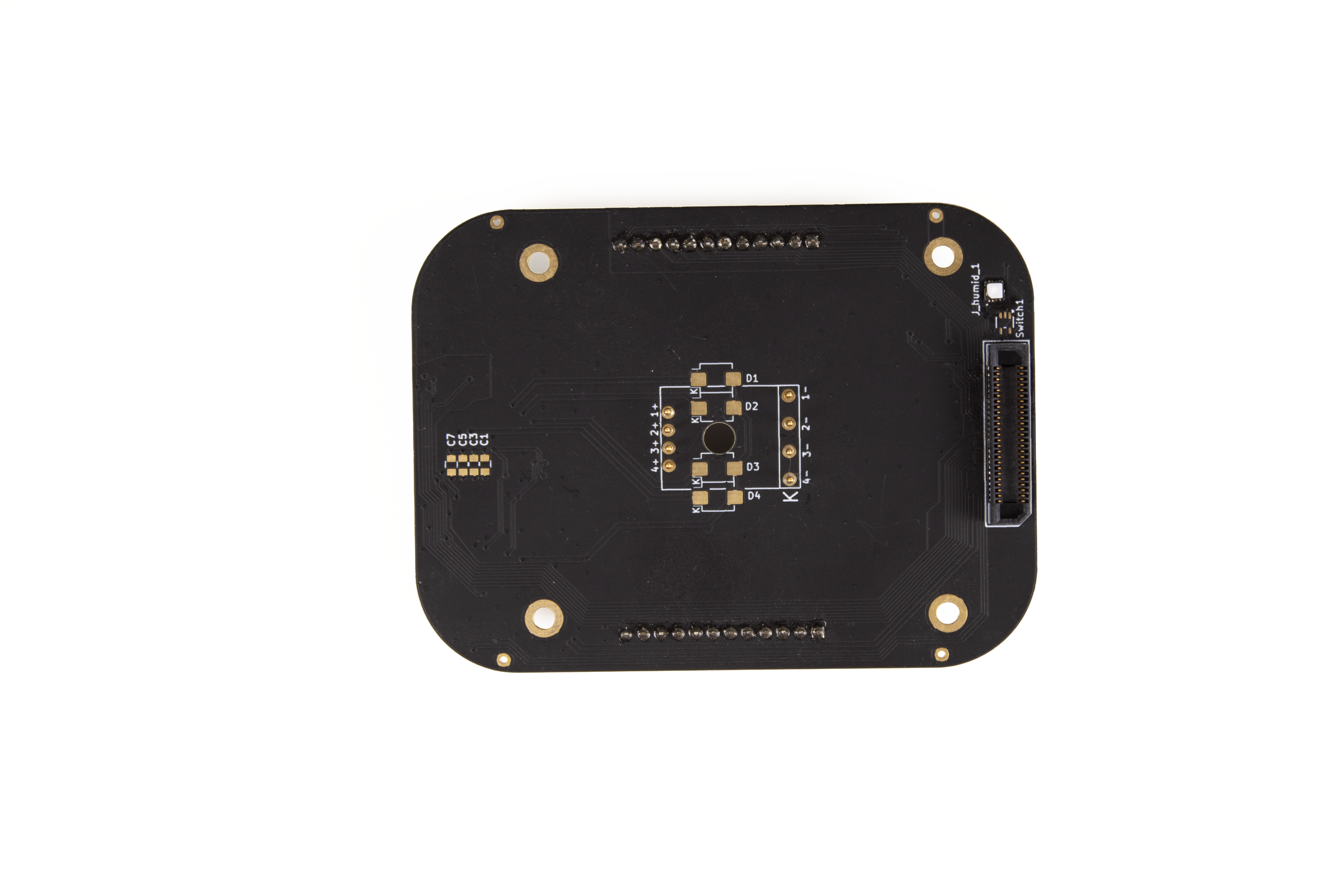
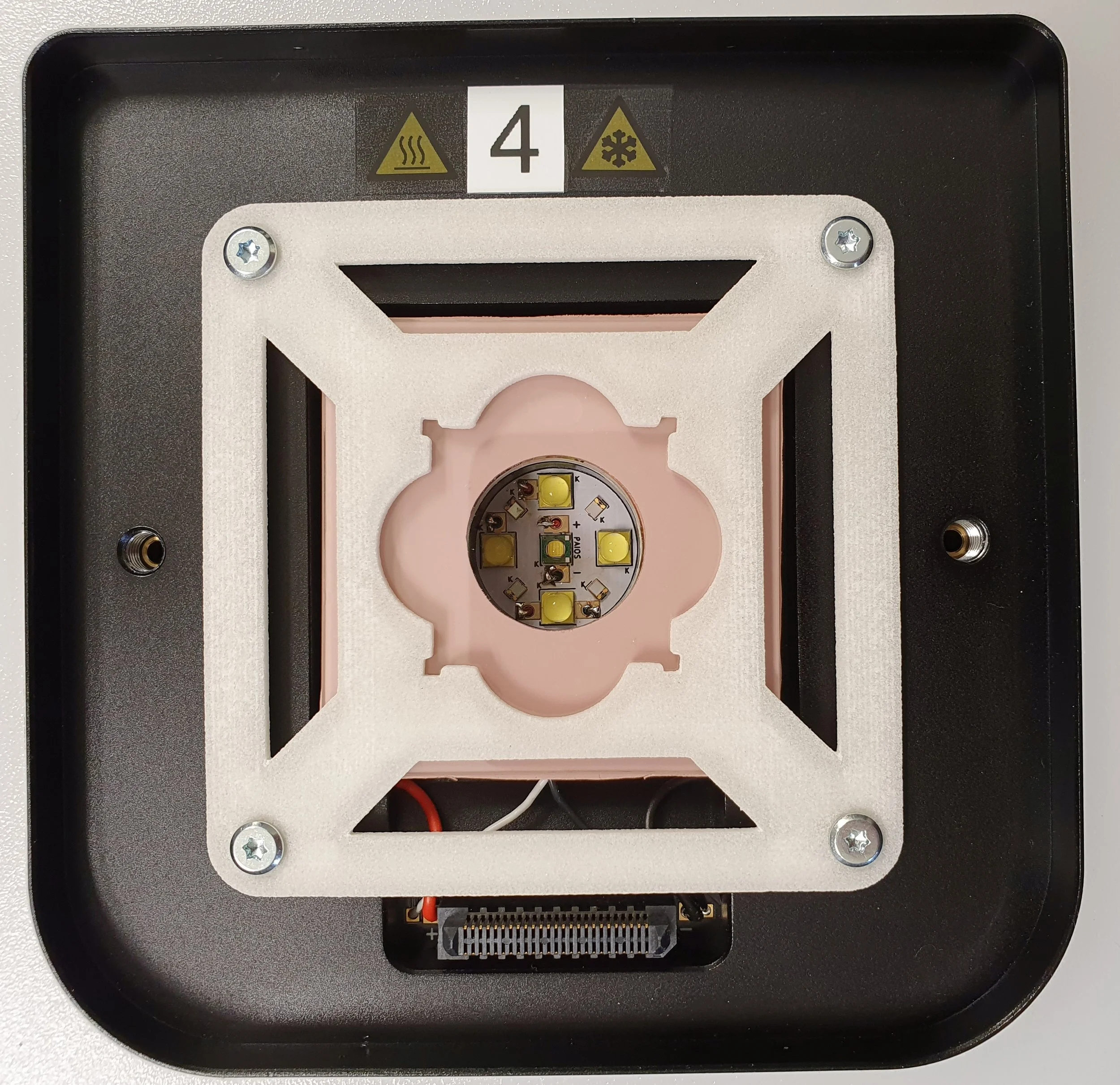
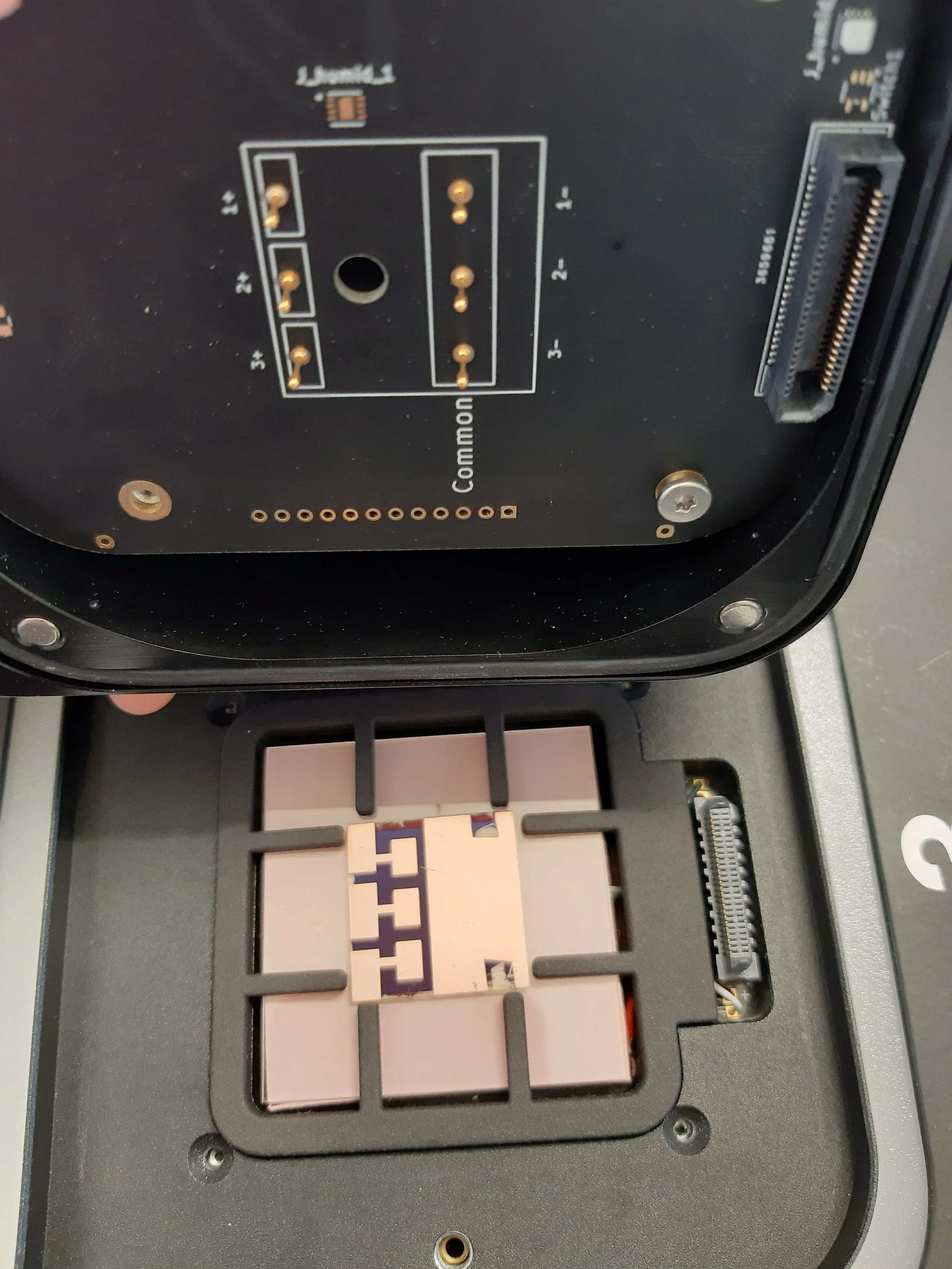
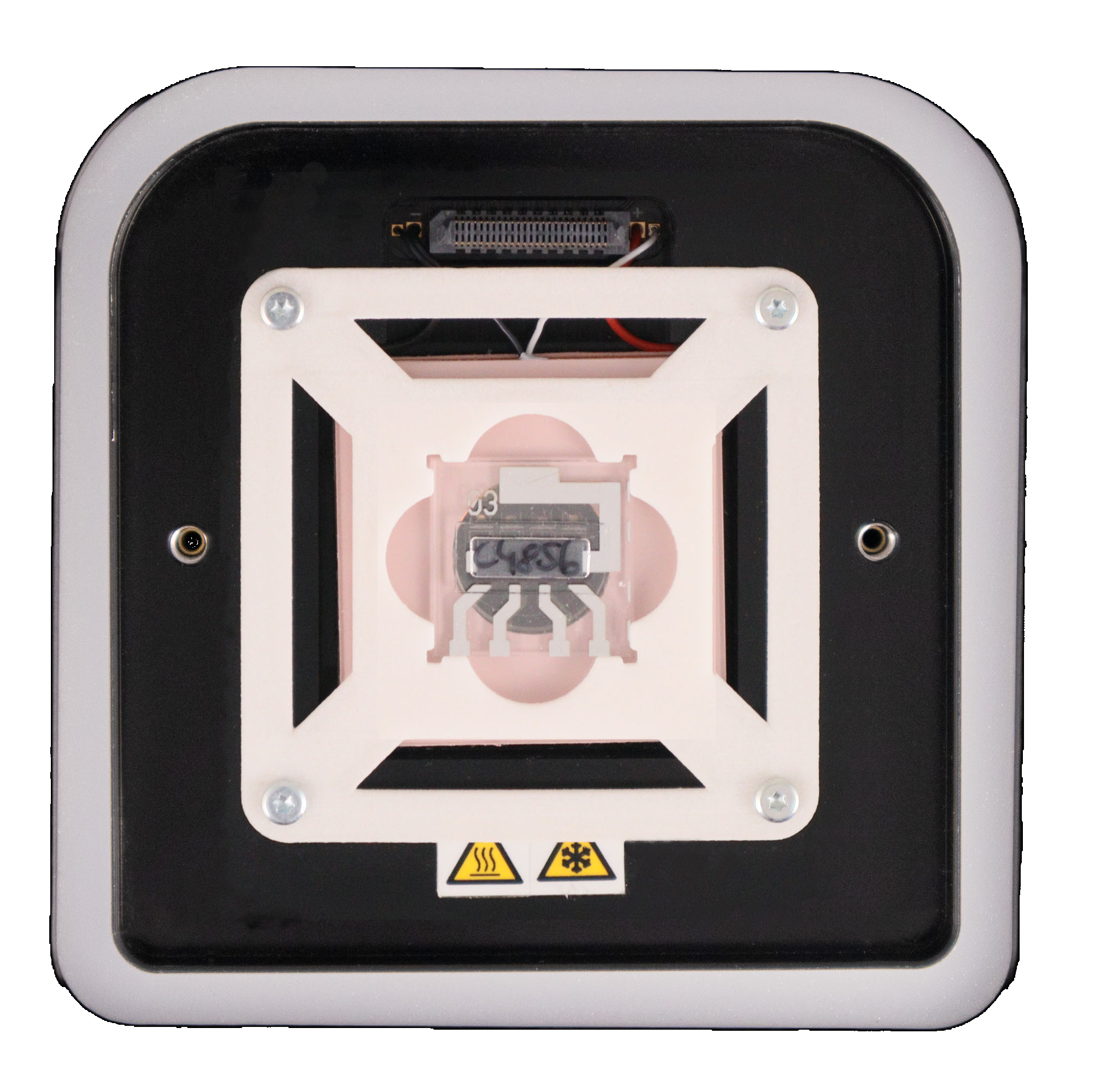
Litos has 4 independent chambers to test simultaneously 4 samples with multiple pixels. The sample holders are custom-made according to the specific layout of our customers.
Multiple sample holders with different layouts can be ordered and quickly replaced in the testing chamber by the user. Depending on the selected configuration, up to 8 LEDs or solar cells can be stressed simultaneously in each chamber (32 devices in total).
Each chamber can be equipped with photodiodes for either bottom-emission or top-emission LEDs. It is not possible to test both top/bottom devices in the same chamber. It is also possible to integrate a spectrometer in each chamber to track the emission of top-emission LEDs.
In the solar cell version each chamber is equipped with white and UV LEDs, allowing to reach light intensities of 1.5 suns-equivalent.
An active cooling and heating system based on Peltier elements is integrated in each chamber. Each chamber has an individual temperature PID controller which enables a temperature range of 0 °C to 85 °C.

















Litos/Paios Integration
Paios and Litos can be connected and managed by the same software (Characterization Suite). In OLEDs for example, the simple luminance decay over time or steady-state analysis is not sufficient to draw meaningful conclusions. A more systematic strategy comprising a wider range of experimental techniques is therefore required. A full characterization of the device during degradation can be performed automatically by combining Paios with Litos:
Understanding the degradation mechanisms of solar cells and LEDs with an automated routine of stressing and analysis.
Current-Voltage(-Emission) IV(L) characteristics.
Transient measurements (CELIV, TPV, TPC, TEL …).
Impedance spectroscopy, CV, IMPS, IMVS.
All measurements can be performed as a function of the temperature ( 0°C to 85°C).
Experimental results from Litos-Paios integration on TADF OLEDs. (a) Emission decay over time measured with Litos. (b) JV curve at different stressing times
Experimental results from Litos-Paios integration on Perovskite Solar Cells. IMPS spectrum and impedance spectrum (inset) over time.
Characterization Suite (CS) Software
Litos is operated via the Characterization Suite (CS), Fluxim’s comprehensive environment for synchronized control of light sources, electrical measurement units, and environmental conditions. CS allows researchers to define and execute complex aging, stability, and performance characterization protocols for optoelectronic devices, including adherence to ISOS standards. Real-time monitoring, automated data logging, and advanced analysis tools enable precise quantification of degradation mechanisms and performance trends. Coupled with simulation in Setfos, CS provides a closed-loop workflow for evaluating device lifetime, optimizing materials, and validating stability models.