
The narrow-bandgap tin-lead subcell limits all-perovskite tandem solar cells, mainly because Sn and Pb crystallize unevenly and Sn2+ oxidizes. He et al. add S-allyl-L-cysteine (SALC), whose thioether group binds preferentially to SnI2 and slows crystallization. The films show uniform Sn/Pb distribution and 3.5 times less Sn(IV). Sn-Pb single-junction cells reach 22.99% with a 0.892 V open-circuit voltage, and all-perovskite tandems reach 28.84% certified (29.44% in the lab). Paios Mott-Schottky and TPC measurements were used to study the devices.
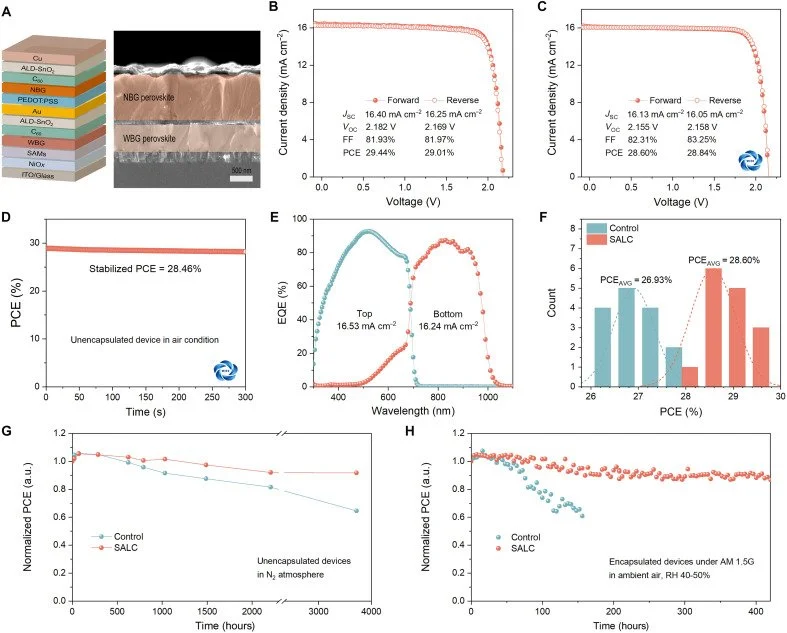
Figure 5 from He et al. (2026), Science Advances, reproduced under CC BY 4.0.
Publication details
Authors: Lijuan He, Haoran Wang, Zhaojin Wang, Zhongliang Yan, Arui Huang, Jing Zhang, Xueying Yang, Miao Zeng, Zaiwei Wang, Guang Yang, Zhifang Shi, Wei Zhang, Liang Shen, Yang Bai, and Hui-Ming Cheng
Journal: Science Advances
Year: 2026
DOI: 10.1126/sciadv.aeb8790
PDF link: https://doi.org/10.1126/sciadv.aeb8790. The article is open access under CC BY 4.0.
Fluxim tools used
Paios — used for Mott-Schottky and transient photocurrent (TPC) measurements.
Why it matters
Targets the weakest link in all-perovskite tandems, the tin-lead narrow-bandgap subcell.
Mott-Schottky analysis showed a higher built-in potential for SALC devices (0.753 V versus 0.696 V), consistent with their higher open-circuit voltage.
Improves both efficiency and operational stability of the full tandem.
FAQs
Which Fluxim tool was used in this paper?
Paios was used for Mott-Schottky and transient photocurrent measurements.
What efficiency did the tandem reach?
The all-perovskite tandem reached a certified PCE of 28.84% (29.44% measured in the lab).
How stable is the tandem?
The encapsulated tandem kept nearly 90% of initial PCE after 420 h of maximum power point tracking under one-sun illumination in ambient air.