
Scaling and automating organic solar cell production is hard because film morphology drifts with processing conditions and delays. Tang et al. add Tz6T to the ink, where it interacts with donor and acceptor molecules and creates more ordered preaggregation. The result is more uniform films, lower bimolecular recombination and 16.4% efficiency for green-solvent modules of 19.3 cm2. The preaggregated ink also tolerates the time delays of robotic fabrication, giving devices above 16%. Setfos 5.4 device simulations were compared with measured J-V curves of control and Tz6T devices.
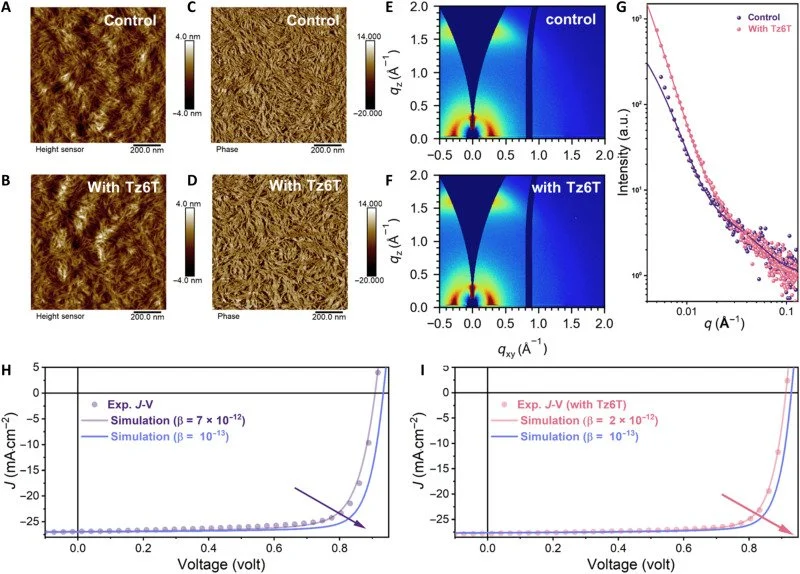
Figure 4 from Tang et al. (2026), Science Advances, reproduced under CC BY-NC 4.0.
Publication details
Authors: Hua Tang, Dingqin Hu, Rong Wang, Yaohui Li, Peihao Huang, Jie Lv, Zesheng Zhang, Yakun He, Tobias Osterrieder, Marco Marengo, Hongxiang Li, Heng Liu, Lingyun Zhao, Qianqian Chen, Jiaming Huang, Xinhui Lu, Yang Michael Yang, Stefaan De Wolf, Duu-Jong Lee, Gang Li, Larry Lüer, Frédéric Laquai, and Christoph J Brabec
Journal: Science Advances
Year: 2026
DOI: 10.1126/sciadv.aea6522
PDF link: https://doi.org/10.1126/sciadv.aea6522. The article is open access under CC BY-NC 4.0.
Fluxim tools used
Setfos — version 5.4 used for device simulations whose J-V curves were compared with measurements of control and Tz6T-treated devices, following the group's earlier simulation procedure.
Why it matters
Addresses both scalability and automation of organic photovoltaics with a single ink additive.
Device simulation helps connect the measured J-V changes to reduced recombination in Tz6T-treated cells.
Shows that the approach works across several material systems and improves long-term stability.
FAQs
Which Fluxim tool was used in this paper?
Setfos 5.4 was used to simulate J-V curves of the control and Tz6T-treated organic solar cells.
What module efficiency was reached?
Green-solvent processed modules of 19.3 cm2 reached 16.4% efficiency.
Why does preaggregation matter for automation?
Controlled preaggregation in the ink limits the morphology drift caused by time delays in robotic fabrication, keeping device efficiency above 16%.