
Perovskite solar cells can show normal hysteresis, where the backward scan performs better, or inverted hysteresis, where the forward scan gives more photocurrent. Torre Cachafeiro et al. study carbon-based triple mesoscopic and planar p-i-n devices that switch between both types depending on scan rate and preconditioning. Spectrally resolved EQE shows that inverted hysteresis comes from blue-range photocurrent losses caused by enhanced interface recombination where ions accumulate. Setfos optical and drift-diffusion simulations reproduce these trends and show that ionic losses can act in both directions.
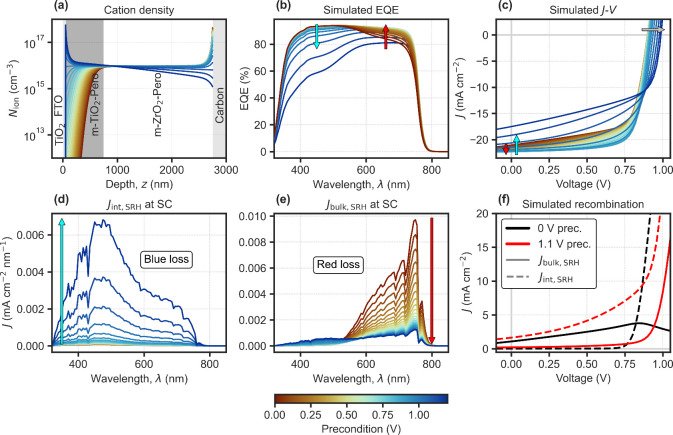
Figure 2 from Torre Cachafeiro et al. (2026), ACS Energy Letters, reproduced under CC BY 4.0.
Publication details
Authors: Miguel Torre Cachafeiro, Carys A Worsley, Fuxiang Ji, Trystan M Watson, and Wolfgang Tress
Journal: ACS Energy Letters
Year: 2026
DOI: 10.1021/acsenergylett.5c04035
PDF link: https://doi.org/10.1021/acsenergylett.5c04035. The article is open access under CC BY 4.0.
Fluxim tools used
Setfos — version 5.5 used for coupled optical and drift-diffusion simulations of EQE spectra and J-V curves for different ionic preconditioning voltages.
Why it matters
Gives a physical explanation for inverted hysteresis that holds across two very different device architectures.
Simulated cation profiles, EQE spectra and interface recombination currents link ion redistribution directly to blue and red photocurrent losses.
Shows that the direction of hysteresis depends on how the ionic distribution affects charge collection efficiency.
FAQs
Which Fluxim tool was used in this paper?
Setfos 5.5 was used for optical and drift-diffusion simulations of the perovskite solar cells.
What causes inverted hysteresis according to this study?
Blue-range photocurrent losses from enhanced recombination at the interfaces where ions accumulate after positive preconditioning.
Which device types were studied?
Triple mesoscopic carbon-based perovskite solar cells and fully planar p-i-n perovskite solar cells.