
In light-emitting electrochemical cells (LECs), electrochemical doping forms a p-n junction whose position sets the emission zone and therefore how much light escapes the device. Poonia et al. place gold nanoparticles at the ITO anode and show that they give a new handle on this doping profile. Non-capped nanoparticles shift the emission zone away from the anode, while citrate-capped ones shift it towards the anode. Setfos 6.0 simulations of luminance versus emission-zone position were used to identify the optically favourable region and to interpret the measured efficiency gains.
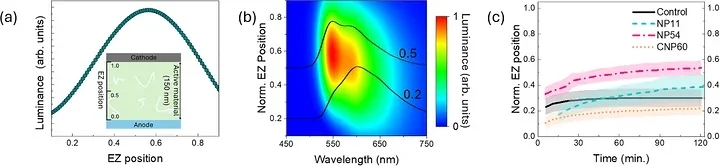
Figure 3 from Poonia et al. (2026), Advanced Science, reproduced under CC BY 4.0.
Publication details
Authors: Ajay K Poonia, Anton Kirch, Joan Ràfols-Ribé, Lucrezia Catanzaro, Anish Rao, Karol Kołątaj, Vittorio Scardaci, Giuseppe Compagnini, Guillermo P Acuna, Ludvig Edman, and Nicolò Maccaferri
Journal: Advanced Science
Year: 2026
DOI: 10.1002/advs.78120
PDF link: https://doi.org/10.1002/advs.78120. The article is open access under CC BY 4.0.
Fluxim tools used
Setfos — version 6.0 used to model outcoupled light from the LEC stack as a function of emission-zone position and wavelength, using the Setfos material database for the electrodes.
Why it matters
Introduces interfacial nanoparticles as a new control parameter for electrochemical doping in organic devices.
Uses optical simulation to show where the emission zone should sit for constructive interference and higher luminance.
Simulated luminance trends agree qualitatively with the measured emission-zone positions.
FAQs
Which Fluxim tool was used in this paper?
Setfos 6.0 was used to simulate light outcoupling from the light-emitting electrochemical cells.
How do gold nanoparticles change the LEC?
Non-capped Au nanoparticles move the emission zone away from the anode, while citrate-capped ones move it towards the anode.
Why does emission-zone position matter?
Moving the emission zone into a region of constructive optical interference increases the fraction of light that leaves the device.