
Surface passivation can reduce ion vacancies and trap states at the perovskite interface, but how it improves charge separation is still debated. Adenle et al. combine phenethylammonium iodide (PEAI) with antimony iodide (SbI3) in a single post-treatment. Metallic Sb0 incorporated at the surface acts as a p-type dopant and charge mediator, while PEAI passivates defects. Champion efficiency rises from 17.93% for the control to 20.02%. Long-term stability was checked with maximum power point tracking in a Litos Lite ISOS stability tester.
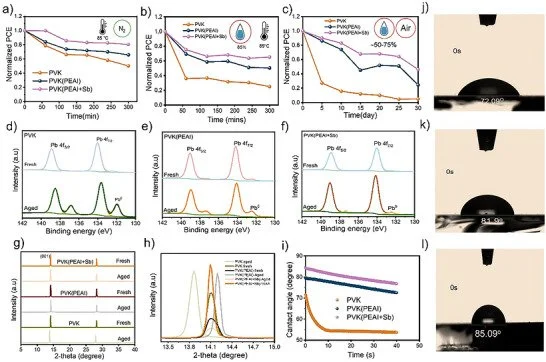
Figure 4 from Adenle et al. (2026), Advanced Science, reproduced under CC BY 4.0.
Publication details
Authors: Abraham Adenle, Purevlkham Myagmarsereejid, Selengesuren Suragtkhuu, Tuul Tsagaantsooj, Solongo Purevdorj, Eric Campbell, Sina Jamali, Oisín E FitzGerald, Taylor J Z Stock, Thomas J Macdonald, Joseph F S Fernando, Hui Jin, Paul E Shaw, Michitoshi Hayashi, Batjargal Sainbileg, Chihaya Adachi, Yu Lin Zhong, and Munkhbayar Batmunkh
Journal: Advanced Science
Year: 2026
DOI: 10.1002/advs.202520257
PDF link: https://doi.org/10.1002/advs.202520257. The article is open access under CC BY 4.0.
Fluxim tools used
Litos Lite — used as the ISOS-compliant stability tester for long-term maximum power point tracking under continuous one-sun illumination in air (ISOS-L-1).
Why it matters
Shows that metallic ions and organic ammonium ligands can work together at the perovskite surface.
Links Sb doping and band alignment to faster interfacial charge extraction and higher open-circuit voltage.
Uses ISOS-L-1 testing on Litos Lite to confirm that the passivated devices hold up under continuous operation.
FAQs
Which Fluxim tool was used in this paper?
Litos Lite was used for long-term ISOS-L-1 maximum power point tracking of the perovskite solar cells.
How much did efficiency improve?
The PEAI+Sb-treated device reached 20.02% PCE, compared with 17.93% for the untreated control and 18.27% for PEAI alone.
What role does antimony play?
Metallic Sb at the surface acts as a p-type dopant and charge mediator that improves interfacial charge separation.