
Efficient and stable blue perovskite LEDs are held back by poor phase purity, high trap density and unfavourable energy-level alignment. Teng et al. use 4-guanidinobenzoic acid hydrochloride (GBAC) both as a buried interface layer and as a bulk additive in quasi-2D perovskite emitters. At the interface GBAC improves wetting and lowers the hole-injection barrier; in the bulk it passivates under-coordinated Pb2+ and suppresses low-n phases, which improves energy funnelling. The dual-treated LEDs reach 10.6% EQE at about 489 nm, more than 60% above the pristine device. Paios capacitance-voltage measurements were used to study charge storage in the devices.
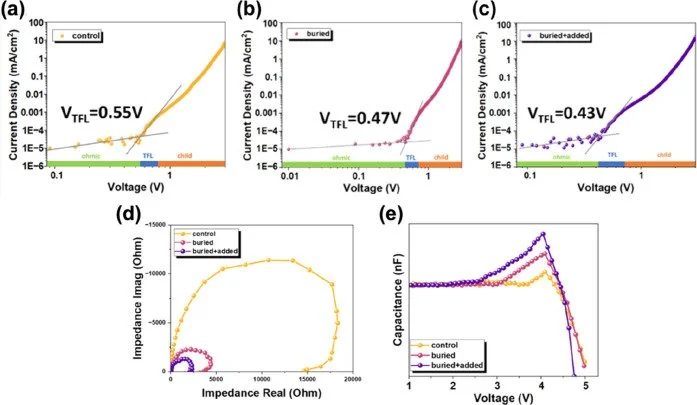
Figure 7 from Teng et al. (2026), ACS Applied Materials & Interfaces, reproduced under CC BY 4.0.
Publication details
Authors: Yu-Hsiang Teng, Hou Li, Chiung-Han Chen, Yen-Yu Wang, Bi-Hsuan Lin, I-Chih Ni, Chi-Ching Kuo, Yu-Jung Lu, and Chu-Chen Chueh
Journal: ACS Applied Materials & Interfaces
Year: 2026
DOI: 10.1021/acsami.5c23193
PDF link: https://doi.org/10.1021/acsami.5c23193. The article is open access under CC BY 4.0.
Fluxim tools used
Paios — used for capacitance-voltage (C-V) measurements to investigate charge storage behaviour in the perovskite LEDs.
Why it matters
Shows that one molecule can address interface wetting, energy alignment and bulk phase distribution at the same time.
Connects suppressed low-n phases and trap passivation to better spectral stability and lower turn-on voltage.
Uses C-V analysis alongside SCLC and impedance data to link charge accumulation to device performance.
FAQs
Which Fluxim tool was used in this paper?
Paios was used for capacitance-voltage measurements of control and GBAC-treated perovskite LEDs.
What efficiency did the sky-blue perovskite LEDs reach?
The dual GBAC-treated devices reached an external quantum efficiency of up to 10.6% at around 489 nm.
What does GBAC do in the device?
At the buried interface it improves film formation and energy alignment; as an additive it passivates Pb2+ traps and reduces low-n phase formation.