
Excess PbI2 helps FAPbI3 perovskites crystallize, but the residual PbI2 left in the film adds non-radiative recombination centres and drives ion migration. Orfanoudakis et al. post-treat FAPbI3 films with 2-diethylaminoethanethiol hydrochloride (DEAET), whose protonated tertiary amine and thiol groups bind under-coordinated Pb2+. The treatment cuts residual PbI2 by 40%, removes metallic Pb0, raises the open-circuit voltage and lifts stabilized efficiency towards 19%. Paios transient photovoltage and hysteresis measurements were used to compare recombination in treated and control devices.
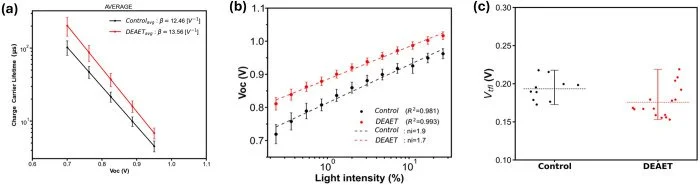
Figure 5 from Orfanoudakis et al. (2026), ACS Applied Energy Materials, reproduced under CC BY-NC-ND 4.0.
Publication details
Authors: Spyros Orfanoudakis, Konstantina Gkini, Filippos Harlaftis, Polychronis Tsipas, Konstantina Yannakopoulou, Athanasios G Kontos, and Thomas Stergiopoulos
Journal: ACS Applied Energy Materials
Year: 2026
DOI: 10.1021/acsaem.6c00017
PDF link: https://doi.org/10.1021/acsaem.6c00017. The article is open access under CC BY-NC-ND 4.0.
Fluxim tools used
Paios — used for transient photovoltage (TPV) and J-V hysteresis measurements on control and DEAET-treated devices.
Why it matters
Shows how a tertiary ammonium-thiol salt can neutralize residual PbI2 without changing the bulk perovskite structure.
TPV lifetimes versus open-circuit voltage gave a higher slope parameter for treated devices (13.56 V^-1 versus 12.46 V^-1), pointing to suppressed trap-assisted recombination.
Links interface chemistry to measurable gains in voltage, hysteresis and operational stability under ISOS-L-1 conditions.
FAQs
Which Fluxim tool was used in this paper?
Paios was used for transient photovoltage and hysteresis measurements of the perovskite solar cells.
What did the DEAET treatment improve?
It reduced residual PbI2 by 40%, eliminated Pb0, increased open-circuit voltage, reduced hysteresis and raised stabilized efficiency to close to 19%.
How stable were the treated devices?
Treated cells kept their initial performance for over 350 h in shelf storage and retained 80% of initial PCE after more than 2 h of continuous ISOS-L-1 operation.