
Perovskite solar cells degrade faster under day-night cycling because the soft lattice expands and contracts with every temperature swing. Li et al. add 2-methacryloyloxyethyl-thioctate (MTA), which crosslinks at grain boundaries through disulfide ring-opening at high temperature and de-crosslinks at room temperature. This holds the film during the hot day phase and lets it recover at night, easing periodic strain. Devices reach 26.5% efficiency. Paios C-V, C-f, TPV and TPC measurements were used to follow trap generation during cycling.
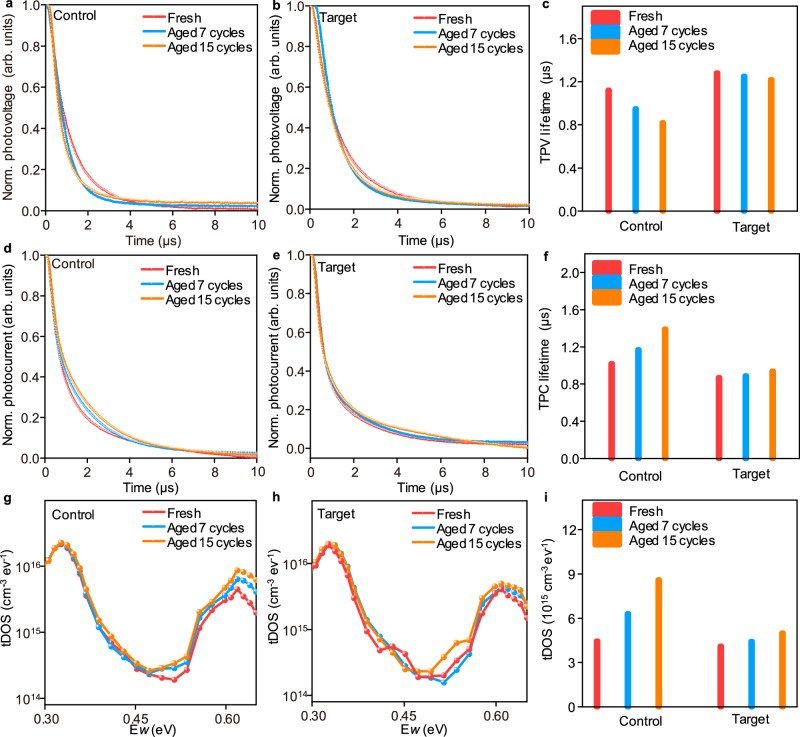
Figure 3 from Li et al. (2026), Nature Communications, reproduced under CC BY-NC-ND 4.0.
Publication details
Authors: Wen Li, Bo Feng, Zhengbo Cui, Wentao He, Chi He, Wenxiao Zhang, Sheng Fu, Xiaodong Li, and Junfeng Fang
Journal: Nature Communications
Year: 2026
DOI: 10.1038/s41467-026-70697-5
PDF link: https://doi.org/10.1038/s41467-026-70697-5. The article is open access under CC BY-NC-ND 4.0.
Fluxim tools used
Paios — used for capacitance-voltage, capacitance-frequency, transient photovoltage and transient photocurrent measurements of devices before and after cycling.
Why it matters
Targets a realistic failure mode, the repeated strain from day-night temperature cycling.
TPV showed control-device lifetimes falling from 1.12 µs to 0.82 µs after 15 cycles, a sign of growing trap-assisted recombination that the crosslinker suppresses.
Shows that dynamic, reversible chemistry can stabilize the perovskite lattice over long operation.
FAQs
Which Fluxim tool was used in this paper?
Paios was used for C-V, C-f, TPV and TPC measurements.
How stable are the MTA devices?
They retained about 95.7% of initial efficiency after 1,800 h of maximum power point tracking under day-night cycling (85 °C light for 12 h, 25 °C dark for 12 h).
How does the crosslinker work?
MTA crosslinks at grain boundaries at high temperature to limit expansion and de-crosslinks at room temperature so the film can recover.