
Intrinsically stretchable organic solar cells need polymer films that stay mechanically robust without losing performance. Zhong et al. use X-ray spectroscopy and scattering to follow how conjugated polymer films change under uniaxial strain. They find two stages, first chain alignment with fast crystallite break-up, then further chain orientation with twisting along the backbone at higher strain. These changes govern stress dissipation, optical absorption and photovoltaic performance. Paios photo-CELIV measurements tracked how charge-carrier mobility changes as the devices are stretched.
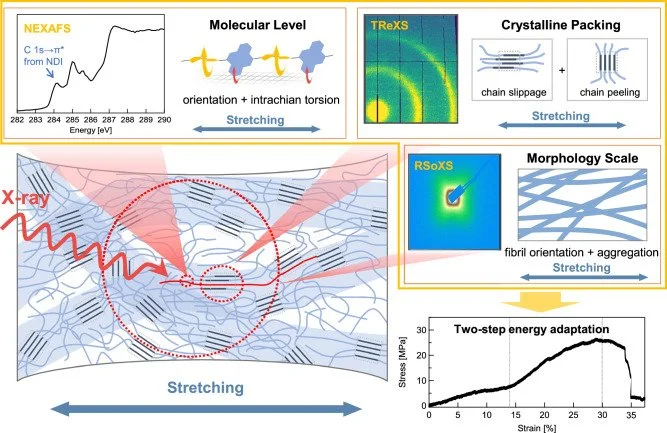
Figure 5 from Zhong et al. (2026), Nature Communications, reproduced under CC BY 4.0.
Publication details
Authors: Wenkai Zhong, Guillaume Freychet, Gregory M Su, Siyi Wang, Xuanang Luo, Xinrui Liu, Wenyu Yang, Lei Yu, Xuefei Wu, Yulong Li, Thomas J Ferron, Thomas P Russell, Lei Ying, Fei Huang, Yongming Zhang, Cheng Wang, and Feng Liu
Journal: Nature Communications
Year: 2026
DOI: 10.1038/s41467-025-68265-4
PDF link: https://doi.org/10.1038/s41467-025-68265-4. The article is open access under CC BY 4.0.
Fluxim tools used
Paios — used for photo-CELIV measurements of devices at increasing strain.
Why it matters
Gives a mechanistic picture of how semiconducting polymers deform at the molecular and mesoscale level.
Photo-CELIV showed mobility falling from 6.59 x 10^-5 to 4.13 x 10^-5 cm2 V^-1 s^-1 with strain, in line with lower charge generation.
Provides design rules for mechanically robust, high-performance stretchable electronics.
FAQs
Which Fluxim tool was used in this paper?
Paios was used for photo-CELIV measurements of the stretchable organic solar cells.
What happens to the polymer film under strain?
There is an initial stage of chain alignment and fast crystallite disruption, followed by further chain orientation and intrachain torsion at higher strain.
How does strain affect charge transport?
Photo-CELIV showed charge mobility decreasing from 6.59 x 10^-5 to 4.13 x 10^-5 cm2 V^-1 s^-1 as strain increased.