
The low dielectric constant of organic semiconductors makes exciton dissociation and charge transfer harder in organic solar cells. Wei et al. design two dielectric regulators with different molecular dipole moments. Dr-2, which uses S...F non-covalent conformational locks, has a more extended backbone, higher polarizability and a larger dipole than Dr-1. D18:L8-BO cells with Dr-2 reach 20.85% PCE, above 20.13% with Dr-1, and 300 nm thick devices still reach 19.56%. Paios photo-CELIV, charge extraction, EIS and Mott-Schottky measurements were used to study charge behaviour.
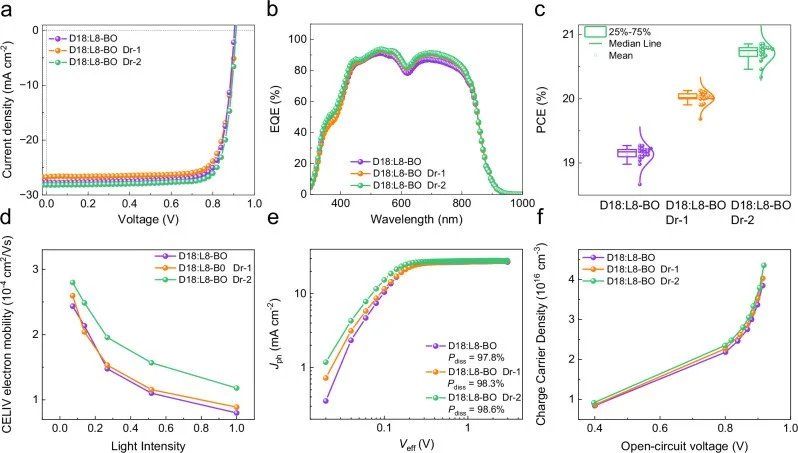
Figure 2 from Wei et al. (2026), Nature Communications, reproduced under CC BY 4.0.
Publication details
Authors: Yanan Wei, Xiaobin Gu, Xue Shi, Meng Zhang, Jikai Lv, Xubing Bai, Lixia Wang, Xin Zhang, Xiangyue Meng, Jianqi Zhang, Xiaotao Hao, Qian Peng, Yunhao Cai, and Hui Huang
Journal: Nature Communications
Year: 2026
DOI: 10.1038/s41467-026-74112-x
PDF link: https://doi.org/10.1038/s41467-026-74112-x. The article is open access under CC BY 4.0.
Fluxim tools used
Paios — used for photo-CELIV, charge extraction (CE), electrochemical impedance spectroscopy and Mott-Schottky measurements.
Why it matters
Shows that tuning molecular dipole moment and planarity together is a design rule for dielectric additives.
Works across several donor-acceptor systems, not only D18:L8-BO.
Keeps high efficiency in 300 nm thick active layers, which matters for printing.
FAQs
Which Fluxim tool was used in this paper?
Paios was used for photo-CELIV, charge extraction, EIS and Mott-Schottky measurements.
What efficiency did the organic solar cells reach?
Dr-2-modified D18:L8-BO cells reached 20.85% PCE, and 300 nm thick devices reached 19.56%.
Why does the dielectric constant matter?
A low dielectric constant limits exciton dissociation and charge transfer, so raising it helps convert excitons into free charges.