
Pure-red perovskite LEDs are needed for full-colour displays, but mixed bromide/iodide emitters suffer from defects and halide migration. Zhang et al. regulate crystallization of quasi-2D perovskites with 4-(trifluoromethyl)benzenesulfonamide, which coordinates with the spacer cations, Pb2+ and halide ions at the same time. Its bulky, ordered assembly in solution steers the film towards nanocrystals with fewer defects, less halide migration and stronger exciton binding. The LEDs emit at about 635 nm with 30.2% peak EQE, over 25,000 cd m-2 and a half-lifetime of 8,426 min. Phelos measured the PL spectrum used in Setfos light outcoupling simulations.
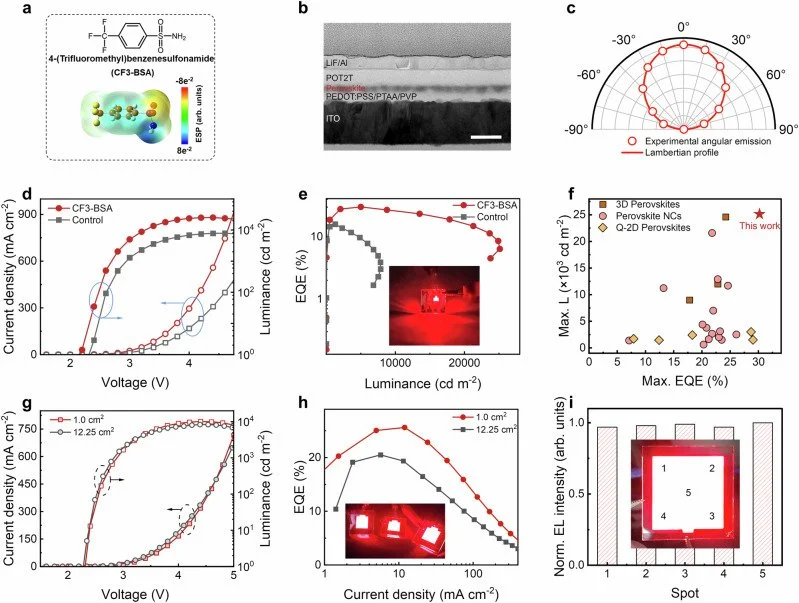
Figure 1 from Zhang et al. (2026), Nature Communications, reproduced under CC BY 4.0.
Publication details
Authors: Jibin Zhang, Tianjun Liu, Qichun Gu, Shuailing Lin, Jian Mao, Zimu Wei, Meng Wang, Yang Lu, Bo Cai, Zher Ying Ooi, Alessandro James Mirabelli, Linyuan Lian, Miguel Anaya, Ying Liu, Mochen Jia, Xu Chen, Yanbing Han, Xinzhen Ji, Yiwei Zhang, Zhuangzhuang Ma, Xinping Zhang, Xin Zhou, Xinjian Li, Fanglong Yuan, Lintao Hou, Chongxin Shan, Neil C Greenham, Samuel D Stranks, and Zhifeng Shi
Journal: Nature Communications
Year: 2026
DOI: 10.1038/s41467-026-72733-w
PDF link: https://doi.org/10.1038/s41467-026-72733-w. The article is open access under CC BY 4.0.
Fluxim tools used
Phelos — used to measure the photoluminescence spectrum through the Setfos-Phelos integration.
Setfos — used to simulate the light outcoupling efficiency of the perovskite LEDs.
Why it matters
Brings pure-red perovskite LED efficiency to a level comparable with quantum-dot and organic LEDs.
Shows how one multifunctional molecule controls nanocrystal formation in quasi-2D films.
Uses a measured PL spectrum in optical simulation to estimate how much generated light can leave the device.
FAQs
Which Fluxim tools were used in this paper?
Phelos measured the PL spectrum and Setfos simulated the light outcoupling efficiency of the perovskite LEDs.
What performance did the red LEDs reach?
Pure-red emission at about 635 nm, a peak EQE of 30.2%, maximum luminance above 25,000 cd m-2 and a half-lifetime of 8,426 min.
What does CF3-BSA do?
The molecule coordinates with spacer cations, Pb2+ and halides, directing nanocrystal formation and suppressing defects and halide migration.