
Colloidal InAs quantum dots are a low-cost, RoHS-compliant route to shortwave infrared (SWIR) photodetectors, but surface traps cause non-radiative recombination and high dark current. Chen et al. passivate these traps with InF3. In solution, the treatment raises the photoluminescence quantum yield of core-only In(As,P) and InAs dots to 13% and 4%. A solid-state in situ treatment of quantum dot films doubles the carrier lifetime and, in photodetectors, lowers the dark current density by an order of magnitude and triples the calculated specific detectivity. Temperature-dependent dark current and thermal admittance spectroscopy measured with Paios show that deep traps dominate the dark current and that InF3 strongly suppresses them.
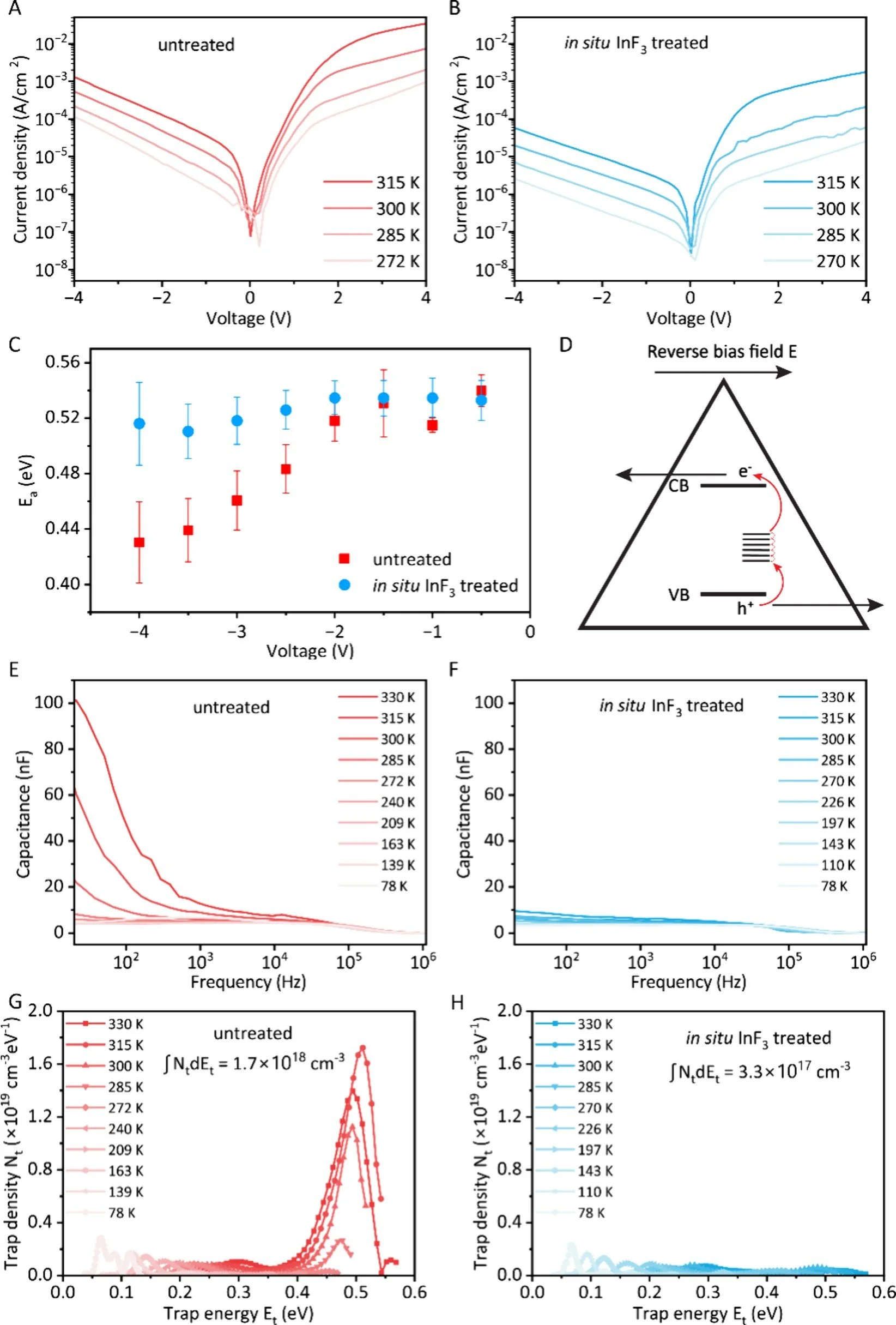
Figure 6 from Chen et al. (2026), ACS Nano, reproduced under CC BY 4.0.
Publication details
Authors: Hua Chen, Boris B. Claus, Wenya Song, Marina Vildanova, Lara M. van der Poll, Anne van Aken, Yan B. Vogel, Jing Bai, Yun Hai, Yigithan M. Kose, Maria Isabel Pintor Monroy, Loredana Protesescu, Tom J. Savenije, Zeger Hens, Itai Lieberman, and Arjan J. Houtepen
Journal: ACS Nano
Year: 2026
DOI: 10.1021/acsnano.6c06196
PDF link: https://doi.org/10.1021/acsnano.6c06196. The article is open access under CC BY 4.0.
Fluxim tools used
Paios — used with a cryostat for temperature-dependent dark J-V and thermal admittance spectroscopy, and for capacitance-voltage and photocurrent measurements of the photodetectors.
Why it matters
Gives a simple passivation route for heavy-metal-free InAs quantum dots, a key material for affordable SWIR imaging and LiDAR.
Thermal admittance spectroscopy pinpoints deep midgap traps as the source of dark current, with trap density falling from 1.7 x 10^18 to 3.3 x 10^17 cm-3 after treatment.
Connects quantum dot surface chemistry directly to photodetector figures of merit such as dark current and detectivity.
FAQs
Which Fluxim tool was used in this paper?
Paios was used for temperature-dependent dark J-V, thermal admittance spectroscopy, C-V and photocurrent measurements.
How much did InF3 reduce the dark current?
The in situ InF3 treatment reduced the dark current density by an order of magnitude and increased the calculated specific detectivity about three times.
What causes the dark current in InAs quantum dot photodetectors?
Temperature-dependent and thermal admittance measurements show it is dominated by deep midgap trap states, which InF3 passivation strongly suppresses.